You are not broken. You're rebuilding.
A gentle, practical roadmap for women recovering from abuse. Feel more relaxed, trust yourself again, and take back your life one small step at a time.
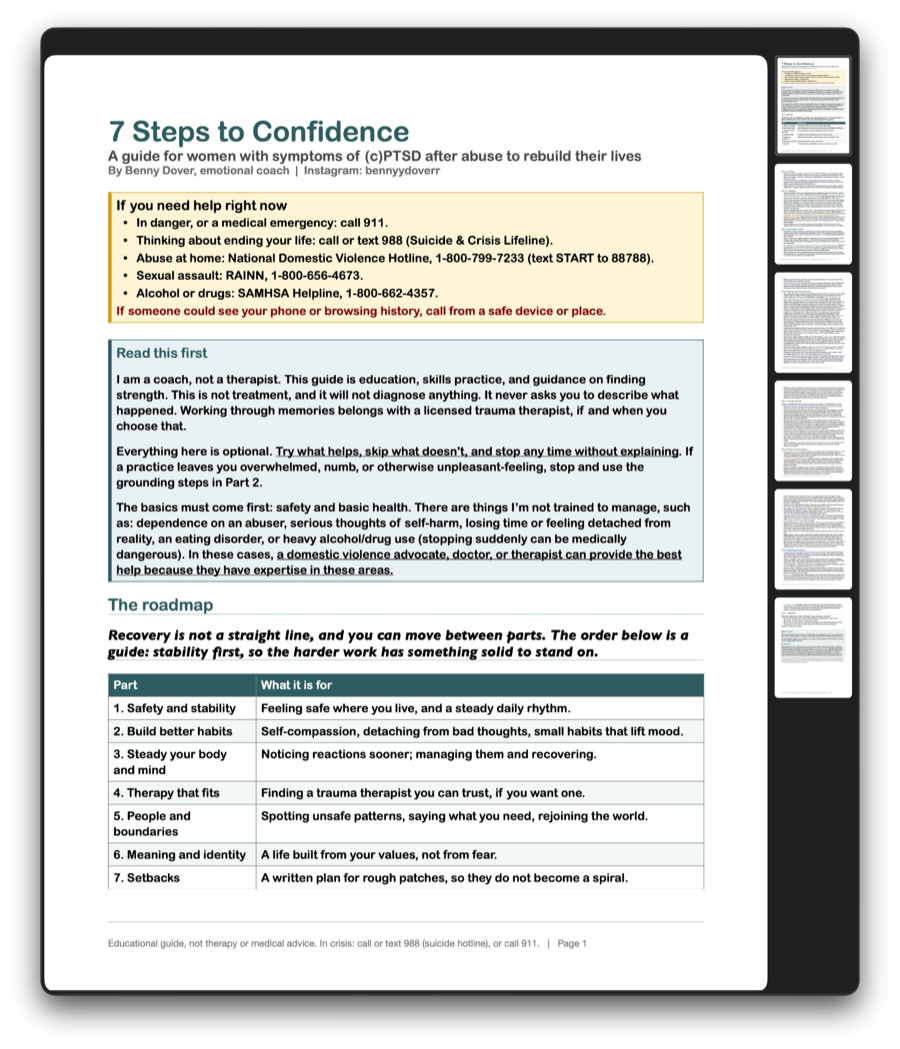
Get the free guide
Six pages. Seven steps. No pressure, no jargon.
If someone else can read your email, consider using an address only you can access. Unsubscribe anytime.
- Your whole body jolts when a door slams or someone comes up behind you
- Lying awake at 2 a.m., replaying what happened, or what you should have said
- Pulling away the moment a date starts to feel close, even when you like them
- Friends who say “that was ages ago, just move on”
- Saying yes when you mean no, then being furious with yourself afterward
- Walking into a room and checking who’s in a bad mood before you can relax
- Feeling nothing at all while everyone around you is laughing
- Wondering “why can’t I just be normal?”
None of this means you’re broken. It’s what surviving leaves behind, and it can change.
The way you react makes sense.
Your heart races over small things, you go numb when you should feel something, you avoid people or places that used to be easy: none of that is weakness. It's your nervous system doing exactly what it learned to do to keep you safe.
You lived through something dangerous, something you perhaps couldn't escape or fight. So your body adapted. It learned to scan for threats, to brace, to shut down, or to keep the peace at any cost. Back then, those reactions protected you. But now, your body doesn't know the danger has passed, so you tense up in places that are actually safe: a crowded café, a raised voice on TV, a partner reaching for your hand.
Every one of those was smart. You survived because of them. Now you get to decide which ones you still need.
That's the good news hidden in the hard part. Something that was learned can be gently re-learned. You don't need to be fearless, and you don't need to have it all figured out. You need a next step small enough to actually take.
I won't lie, some of this may feel uncomfortable at first. That’s normal, and you set the pace: push yourself a little, but never to the point of overwhelm. If something feels like too much, skip it or come back later.
The goal isn't to never feel overwhelmed again. It's to notice sooner, then relax sooner.
Another thing: if you've tried therapy and walked away, that wasn't a failure either. It was information about what you need. If you feel ready for therapy again, the 7 Steps to Confidence guide includes a plain-language tour of the main therapies, plus a checklist for choosing a practitioner.
Ground yourself: come back to the present
Keep your eyes open. Skip any step that doesn't feel right.
- Press your feet into the floor and feel it holding you up.
- Name five things you can see, four you can touch, and three you can hear.
- Quietly say your name, today's date, and where you are.
- Say to yourself: "This is hard, and I'm doing my best."
That's a real skill, and you just used it. Notice how that feels. Confidence is built exactly like this: one small thing you did, then another.
Prefer to learn live? Join the free webinar. Want to talk one-on-one? Book a free consultation.
Seven steps, in an order that makes sense
Stability first, so the harder work has something solid to stand on. Move between steps whenever you need to.
The steps draw on approaches studied with trauma survivors, like STAIR (a skills program tested with women who survived childhood abuse) and Behavioral Activation (rebuilding your mood through small, doable actions), rewritten for everyday life.
Safety & stability
Check in on how safe you feel where you live, protect your devices and accounts, and build a tiny daily routine you can actually keep.
Steady your body & mind
Understand your "window of tolerance," map your warning signs, and learn grounding and feelings-surfing for hard moments.
Build better habits
Self-compassion that keeps you going, small pleasures that lift your mood, and a simple chart to see what really helps.
Therapy that fits
If you want it: the main trauma therapies explained simply, questions for a first call, green flags, red flags, and how to switch.
People & boundaries
Spot unsafe patterns early, say what you need without swallowing it or exploding, and rejoin the world step by step.
Meaning & identity
Find values that are truly yours, build "I am someone who…" statements from real evidence, and climb your own less-fear ladder.
Setbacks
A short plan you write while you're well, so a rough patch stays a rough patch and doesn't become a spiral.
Prefer to learn live? Join the free webinar. Want to talk one-on-one? Book a free consultation.
Made for women who are ready for something practical
- You've lived through sexual assault, domestic abuse, or abuse in childhood
- You're tired of feeling on edge, numb, or stuck, and want tools you can use today
- You've tried therapy and left, or you're skeptical it's for you
- You want to move forward without being asked to retell your story
An honest note: I'm a coach, not a therapist. This guide is education and skills practice, not treatment. Everything in it is optional: try what helps, skip what doesn't.
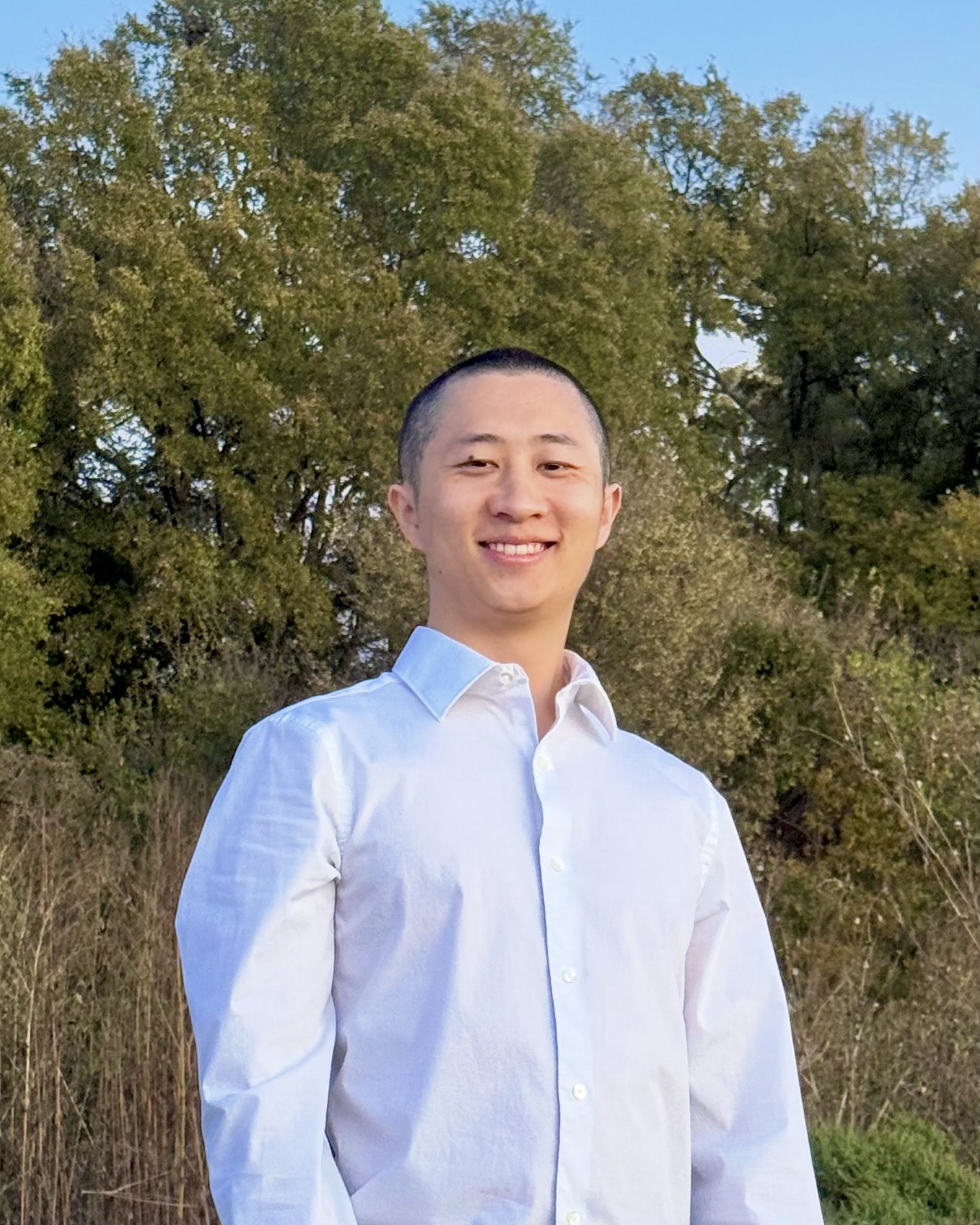
Why I wrote it
My parents abused me. I felt alone, scared, and suicidal for much of my life. It took me years to find a way out of my darkness, and I want to help the millions of women out there who went through similar traumas to find the light too.
For most of my life I didn't believe things could feel any different. But I experienced progress. It wasn't a straight line, and I didn't do it by being fearless. I did it by trying one thing at a time.
I made a lot of mistakes. I retraumatized myself a bunch. I don't want the path to be as difficult for you. That's why the guide puts stability first, so that you progress much faster than I did.
This guide is the roadmap I wish I'd had: the practical tools, in the rough order that makes them work.
Many women stood where you are. Many persevered and found happiness. Let's start with one step.
Send me the free guidePrefer to learn live? Join the free webinar. Want to talk one-on-one? Book a free consultation.